How Crowded Is Fushimi Inari Shrine?

Fushimi Inari Shrine (Fushimi Inari Taisha) is world-famous for its "Senbon Torii (Thousand Torii Gates)"—a tunnel-like path lined with thousands of vermilion torii gates. During special events and peak seasons, the shrine is illuminated at night, creating a mystical atmosphere that feels like stepping back into ancient Japan. However, as one of Kyoto's top attractions, it is notoriously crowded. So, when is the best time to visit to avoid the crowds and enjoy a more peaceful experience?
Fushimi Inari Shrine: Essential Visitor Info
Location: 68 Fukakusa Yabunouchicho, Fushimi-ku, Kyoto, Japan
Hours: Open 24 hours a day
Admission Fee: Free
Opening Hours & Accessibility
The shrine grounds are open 24 hours a day, allowing visitors to come and go at any time.
Since there are no main gates that close, anyone can visit and offer prayers whenever they wish, completely free of charge.
Please note, however, that the charm and amulet counters (where you can purchase lucky charms, omikuji fortunes, and talismans) and the prayer reception desk are only open from morning until late afternoon.
(The main shrine’s charm and amulet counters typically stay open until around 6:00 PM [Japan Standard Time, UTC+9], though hours may be extended during the New Year period. Ritual prayer services are accepted until 4:30 PM, so it is recommended to arrive by 4:00 PM if you plan to request one.)
Visit Early Morning (or Night) to Avoid the Rush!
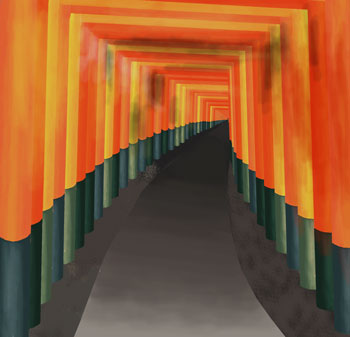 I visited Fushimi Inari during the peak autumn foliage season in Kyoto on November 29th and 30th.
By 7:45 AM, a significant number of tourists had already gathered.
Conversely, after 9:00 PM (luckily during a light-up period), there were very few visitors, and I was able to experience the Senbon Torii in their full, ethereal glory.
Even during peak season, we highly recommend visiting in the very early morning (from sunrise until 8:00 AM) for a serene atmosphere.
While visiting at night is another great way to beat the crowds, be aware that without special illumination, the path is only lit by basic trail lamps and can feel quite dark.
During festivals or peak autumn foliage, the Senbon Torii are sometimes illuminated for special seasonal events, creating a truly magical atmosphere (be sure to check the official website for schedules). These night visits offer a uniquely elegant charm.
Is the Senbon Torii (Thousand Torii Gates) Path One-Way?
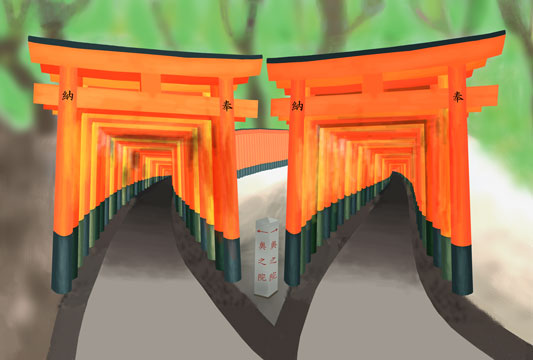
To be honest, I once visited during a quiet hour and accidentally walked through the left side of the gates.
The main Senbon Torii path is actually split into two parallel lanes. Since there are signs indicating the route, you should generally keep to the right. While some people may not notice this when it's empty at night, walking against the flow during busy hours can be disruptive to other visitors. Please keep this in mind!
Can You Take Photos at Fushimi Inari Shrine?
According to the official Fushimi Inari website, photography for commercial purposes or in restricted areas is strictly prohibited.
However, in areas without "No Photography" signs, personal photography is generally permitted. (Capturing photos of the Senbon Torii is perfectly fine for personal memories!)
How to Get to Fushimi Inari Shrine (Access)
JR Nara Line: Get off at Inari Station (5 minutes from Kyoto Station). It’s a short walk from the exit.
Keihan Main Line: Get off at Fushimi-Inari Station. Head east for about a 5-minute walk.
Kyoto City Bus (Route South 5): Get off at Inari Taisha-mae. Head east for about a 7-minute walk.
Best Areas to Stay Near Fushimi Inari
While there are some good hotels and traditional inns (ryokan) scattered around the Fushimi Inari Shrine,
here are some other convenient areas for sightseeing:
https://expedia.com/affiliate/PIe3ofy
1. Kyoto Station & Tofukuji Area
The last JR Nara Line train leaves Inari Station at 12:04 AM (JST) and arrives at Kyoto Station at 12:09 AM. The first train from Kyoto Station departs at 5:33 AM and arrives at Inari Station at 5:39 AM. This area is perfect for those who want to visit Fushimi Inari easily during the early morning or late night hours.
Additionally, Tofukuji Temple is nearby. It is famous for its stunning autumn colors viewed from the Tsutenkyo Bridge—definitely worth the extra stop!
2. Higashiyama Area (Sanjo Keihan, Kiyomizu-Gojo, Gion)
The last Keihan Main Line train leaves Fushimi-Inari at 12:20 AM (JST) and arrives at Sanjo Keihan at 12:30 AM. The first train from Sanjo Keihan departs at 5:04 AM and arrives at Fushimi-Inari at 5:14 AM. This area is also excellent for early or late shrine visits.
Sanjo Keihan is a bustling downtown area, and the night view of the Kamo River from Sanjo Ohashi Bridge is breathtaking.
The Kiyomizu-Gojo area is close to Kiyomizu-dera Temple and the historic Ninenzaka and Sannenzaka streets, making it a prime location to stay.
Gion offers a classic Kyoto atmosphere with its traditional restaurants. If you’re lucky, you might spot a Geiko or Maiko on Hanamikoji Street around 5:00–6:00 PM local time. However, the area around the Gion Shijo station features some ordinary restaurants and bars, with a slight nightlife vibe.